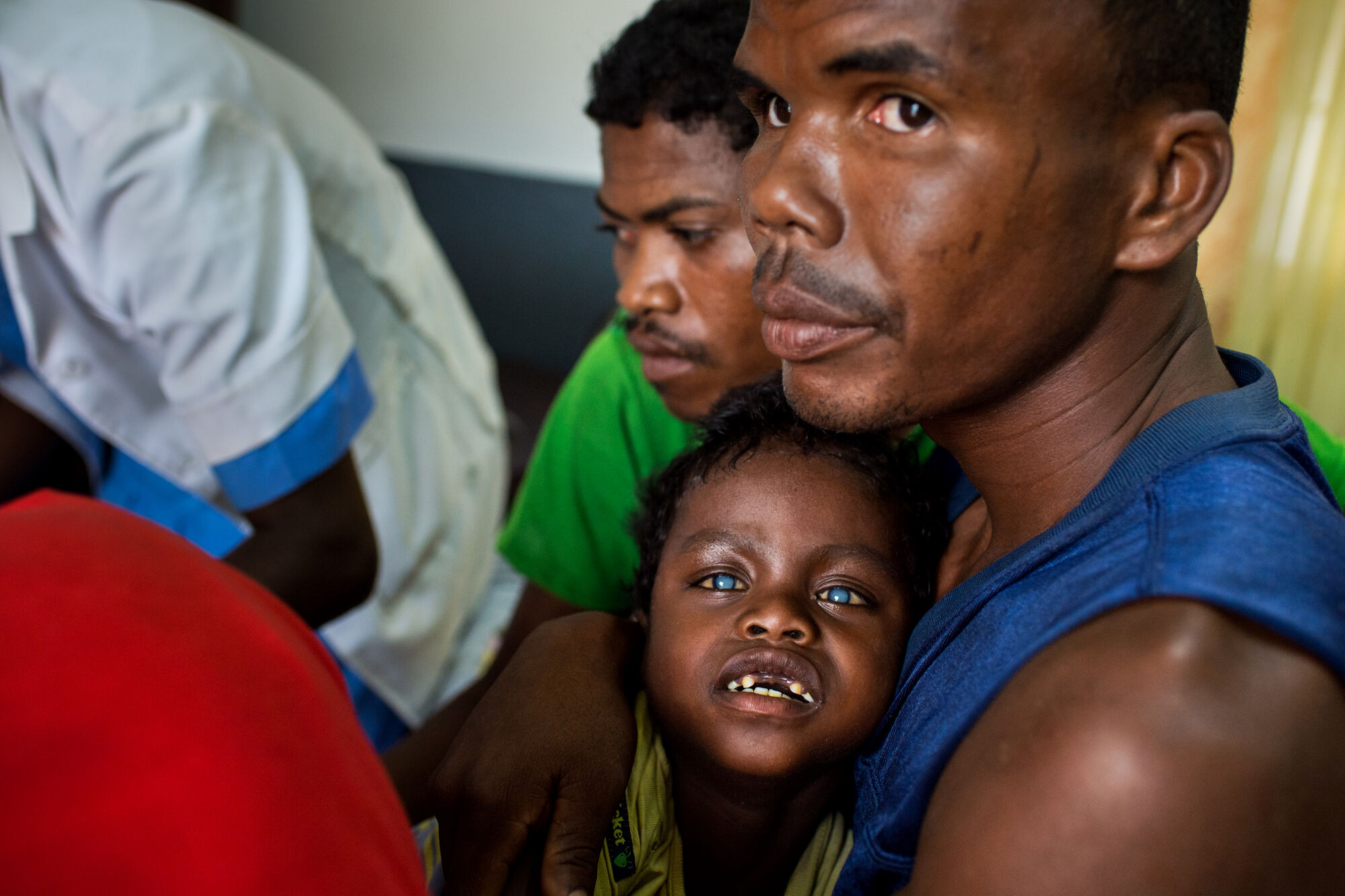

At just five years old, Sesan from rural Nigeria was already living in near-total darkness. Born with cataracts in both eyes, his world narrowed to the space around his small home. Outside, sunlight was painful; inside, he felt his way along crumbling walls, grasping at hanging clothes or running his hands across the rough surfaces to orient himself.
Sesan lives with his parents, Olanike and Noah, and his four siblings in a modest, crumbling house with no running water or electricity. His father farms a small plot of land—cassava, yams, maize, and pepper—barely enough to feed the family. Selling any surplus is rare. “It’s just enough to feed the family. If there is a little extra, I try to sell it to bring in money,” Noah explains. For a family living hand-to-mouth, the idea of paying for surgery was unimaginable.
They first noticed spots in Sesan’s eyes when he was two. Noah recalls, “We hoped there would be treatment, but all we could do was pray because we didn’t have the financial strength to get help.” By the time Sesan was five, he could no longer go to school. Walking outside was dangerous—he often fell into ditches, returning home bruised. His mother, Olanike, said sadly, “He cannot read and he cannot write all because of this problem. He also cannot play with his friends as well as he would love to. He falls down most times.”
Still, Sesan tried to play. His favourite toy was a small orange-and-brown plastic ball. He followed it by sound as it bounced across the floor, crawling after it. Outside, though, the frustration was clear. He couldn’t join the games of his brothers and friends. His brother would lean down to help him find the ball, gently encouraging him to try again. The love in that gesture was moving—but the sadness was unmistakable.
Faith became their anchor. “All I did was pray about it and surrender it into God’s hands,” Noah said. Olanike echoed him: “I believe God will send us a helper who will help with his eye problem.” Their church community prayed with them every Sunday for Sesan’s healing.
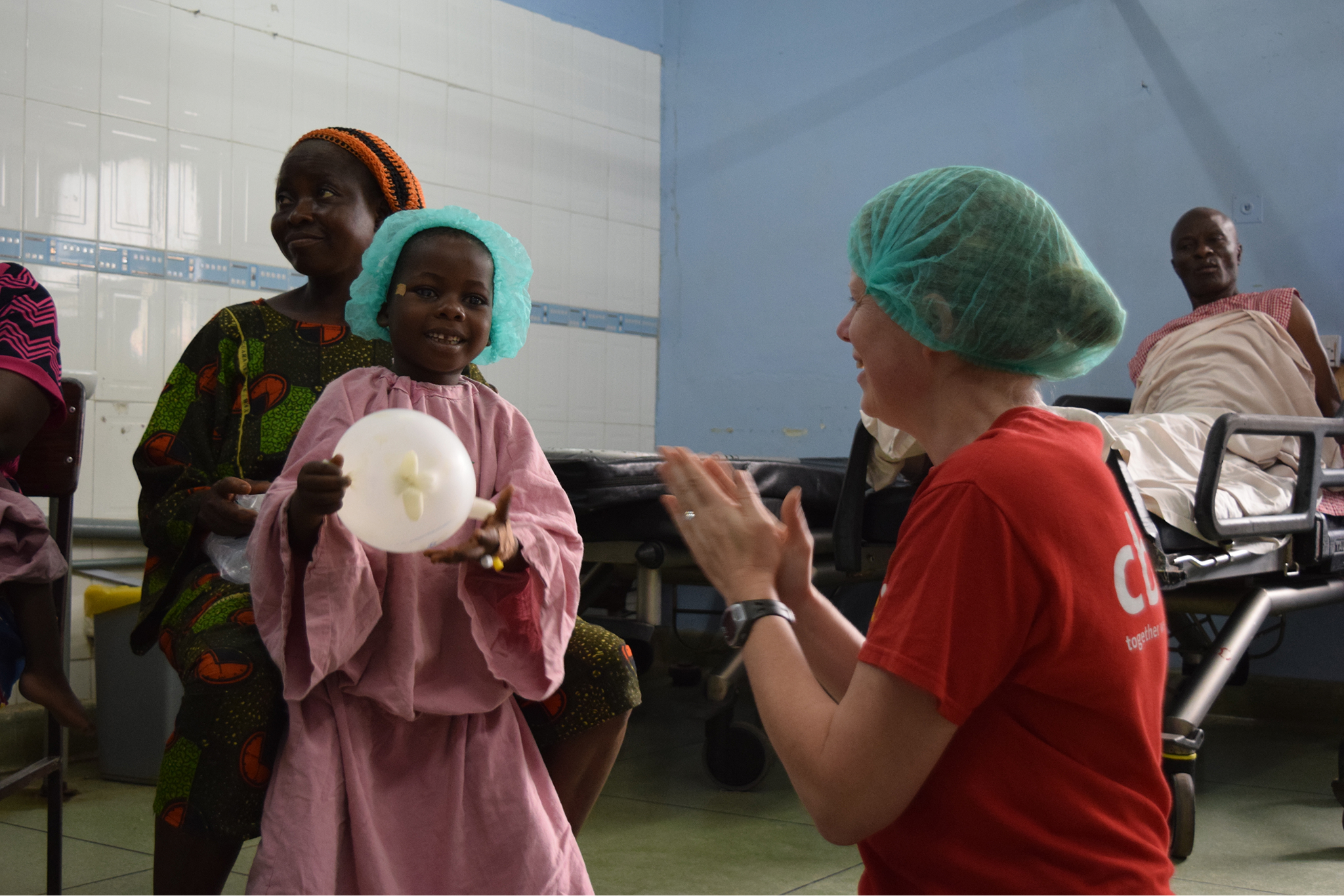
That healing came when Sesan was referred to University College Hospital (UCH) in Ibadan through a CBM-supported programme. On the day of his surgery, Sesan was nervous, clinging to his father’s hand, confused and frightened in the unfamiliar hospital. Yet small moments of kindness lightened the tension: a nurse fashioned a balloon elephant from a latex glove, delighting Sesan and filling the waiting room with his giggles.
Dr. Mary Ugalaih, a paediatric ophthalmologist, performed the surgery. “Sesan barely had mobility vision. He had dense cataracts in both eyes,” she explained. “If left untreated, he would be unable to go to school, unable to interact with other children, and this would affect his whole life.” The surgery lasted 45 minutes.
The next day, a nurse carefully removed the bandage covering Sesan’s eyes. There was a pause. Then, slowly, he smiled. “He can see,” the nurse said softly.
Back in his hospital bed, Sesan immediately reached for his ball. This time, he caught it as it rolled back without searching, his laughter filling the room. Soon after, he picked up crayons and, for the first time in his life, began to draw. Circles, colours, and shapes appeared on the paper—his world opening up in lines and shades he had never seen before.
“When I grow up, I want to work with a car,” Sesan said with a smile. For a child who once lived in shadows, that dream now felt possible.