

In Kahika village, 90 kilometres northeast of Kampala, five-year-old Rebecca Nankya dreams of running freely, playing football with her friends, and one day becoming a doctor. But for Rebecca, even the simple act of walking is painful. Born with bilateral clubfoot, both of her feet curve sharply outwards, making every step a challenge.
Rebecca’s mother, Hamida Nanyonga, was just 18 when she gave birth. At first, she thought her baby was healthy. “At birth I did not see anything, her feet were not swollen either,” Hamida recalls. “But when she made six months and started crawling, I realised her feet were folding outwards. What came to my mind was:
How on earth am I going to cope with a lame child?”
For years, Hamida had no idea where to turn. Living in poverty, she could not afford the surgery doctors said her daughter needed. “I endured the pain of raising her,” she says. “Considering my financial situation, I could not afford medical bills. I did not take her to hospital.”
Life has not been easy for the family. Rebecca’s father left when she was very young, and Hamida has struggled to provide alone by growing beans, cassava, and maize. Their home is a small grass-thatched mud hut, with no electricity, and often little food. “Eating once a day and staying without breakfast is something that my daughter is well familiar with,” Hamida admits.
Rebecca’s disability only compounds the challenges of daily life. She cannot walk long distances, fetch water, or help in the fields like other children. At playtime, she is often left behind. “The friends can easily leave her there and she cries,” Hamida says quietly. Football is her favourite game, but pain in her ankles and knees forces her to stop and rest.
In a community where disability is heavily stigmatised, Hamida also bears the weight of cruel words. “People put the blame for her disability on me,” she says. “Once a person asked what crime I committed to deserve a baby like her.” Still, Hamida is determined to support her daughter: “I wish Rebecca to get her legs corrected so that she regains normal life to grow into a full woman like me.”
For a long time, hope seemed out of reach. Then one day, a member of the Village Health Team (VHT) told Hamida about an outreach clinic by CBM’s partner CoRSU Rehabilitation Hospital. For the first time, Hamida believed her daughter might finally get help.
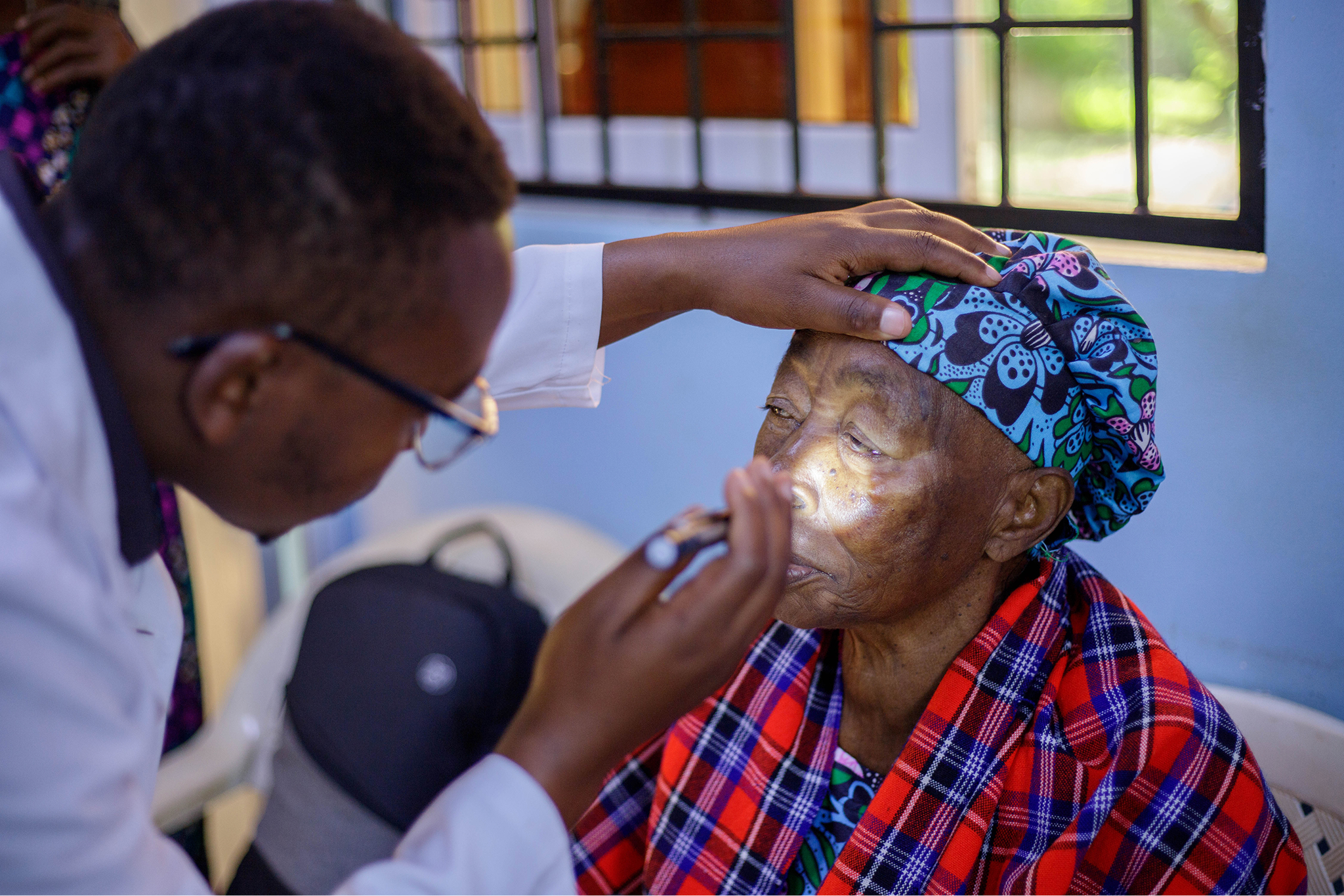
At CoRSU, orthopaedic surgeon Dr Antonio Loro examined Rebecca. His assessment was positive: “Rebecca has neglected bilateral clubfoot. Her feet are not stiff but extremely flexible. With a few casts, a small surgery, and rehabilitation, we can expect a very good outcome.”
Rebecca has now begun her journey to recovery. She will receive casting, surgery, and follow-up care to help her walk straight. For Hamida, it is the answer to years of worry.
“I am so grateful that CoRSU will take care of my child now,”
she says with relief.
Rebecca’s own wish is simple: she wants to be like her “mama”—strong, caring, and able to provide for her family. Thanks to this intervention, her dream of walking freely, going to school, and chasing her goals is finally within reach.